Athena Aktipis
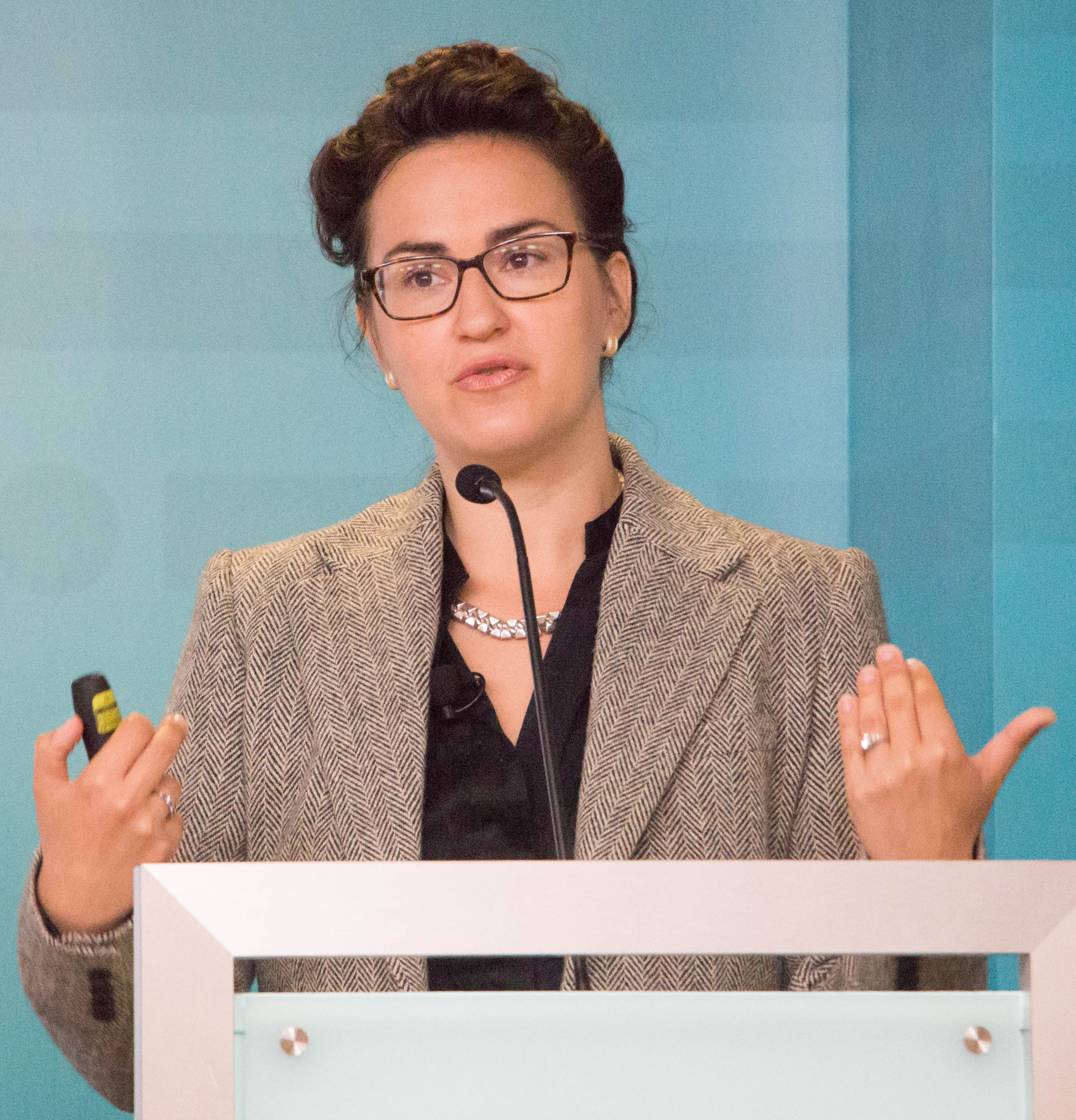
Athena Aktipis is an American evolutionary biologist and psychology professor at Arizona State University. She frames cancer as somatic cheater evolution within multicellular cooperation and models cooperative stability using spatial agent-based simulations. She also studies human mutual-aid networks.
Cancer as cellular cheating and spatial modeling
Aktipis argues that multicellular organisms function as evolutionarily maintained cooperative societies structured around shared cellular agreements: proliferation inhibition, regulated cell death, division of labor, resource allocation, and maintenance of the extracellular environment.12 Cancer arises when somatic lineages defect from those constraints and win local selection at the organism’s expense, driven by evolved life-history trade-offs across host tissues.3
Using spatial agent-based models (such as NetLogo and lattice evolutionary simulations), Aktipis and collaborators tested how resource viscosity, apoptosis sensitivity, life-history trade-offs, and secreted public goods govern whether cheater cells invade a tissue or stay contained by cooperators.12 Those models show that spatial structure and local tissue architecture—not intracellular repair alone—limit how long a multicellular body suppresses somatic defectors.
Institutional building and human cooperation
Aktipis co-founded the Center for Evolution and Cancer at the University of California, San Francisco with Carlo Maley and has served in the leadership of the International Society for Evolution, Ecology, and Cancer (ISEEC), including as Vice President and later President (2022–2025).
Outside oncology, she directs the Human Generosity Project, combining comparative anthropology—such as osotua need-based risk pooling among Maasai pastoralists—with agent-based models of mutual aid to study how need-based transfers stabilize cooperation under volatile environmental risk.
See also
References
Footnotes
- Aktipis CA, Nesse RM. Evolutionary foundations for cancer biology. Evolutionary Applications. 2013. doi:10.1111/eva.12034. ↩↩2
- Aktipis A. The Cheating Cell: How Evolution Helps Us Understand and Treat Cancer. Princeton University Press, 2020. ↩↩2
- Aktipis CA, Boddy AM, Gatenby RA, Brown JS, Maley CC. Life history trade-offs in cancer evolution. Nature Reviews Cancer. 2013. doi:10.1038/nrc3606. ↩