David Sloan Wilson
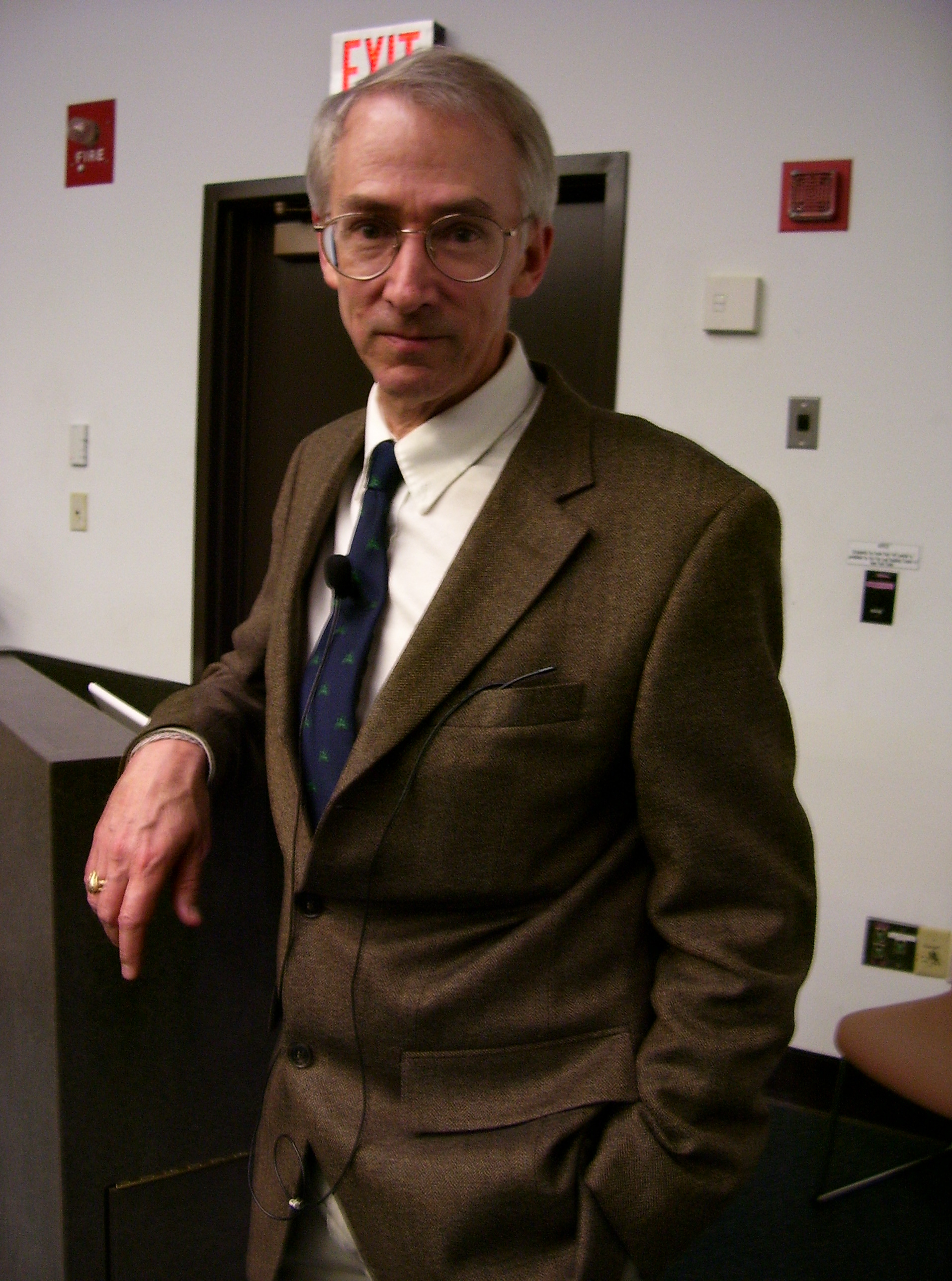
David Sloan Wilson (born 1949) is an American evolutionary biologist and professor emeritus at Binghamton University. He revived multilevel selection theory and applied it to animal behavior, cultural evolution, and institutional design.
Multilevel selection and empirical work
In the 1970s, Wilson developed mathematical trait-group models demonstrating how selection between transient, localized interaction groups can outweigh selection against cooperators within each group. Together with philosopher Elliott Sober, he synthesized this perspective in Unto Others: The Evolution and Psychology of Unselfish Behavior (1998), summarizing the trade-off as: “Selfishness beats altruism within groups. Altruistic groups beat selfish groups. Everything else is commentary.”1
Outside theoretical modeling, Wilson studied behavioral ecology and phenotypic divergence in freshwater fish—working with Lee Alan Dugatkin and Beren Robinson on Trinidadian guppies (Poecilia reticulata) and polymorphic sunfish—connecting predation risk, cooperative predator inspection, and local resource competition to population differentiation.
Debates with inclusive-fitness theorists
Wilson’s rehabilitation of multilevel selection prompted a sustained debate with inclusive-fitness theorists, including Stuart West, Andy Gardner, and Ashleigh Griffin.2 Gene-centered critics contend that trait-group selection is mathematically equivalent to inclusive fitness (Hamilton’s rule) and warn that invoking group selection obscures clarity and risks reviving naive group-adaptation fallacies.2 Wilson replies that mathematical inter-translatability does not imply causal equivalence: partitioning variance across levels highlights group-level selective pressures—especially in non-kin collectives and human institutions—that individual-level bookkeeping can mask.13
Cultural evolution and applied prosociality
Wilson extended multilevel selection to human cultural systems, interpreting religious traditions in Darwin’s Cathedral (2002) as group-level mechanisms that promote cooperation and constrain internal defection.4 He later applied these principles through the Binghamton Neighborhood Project and the Prosocial initiative—combining Elinor Ostrom’s commons-governance rules with behavioral psychology—and summarized his evolutionary worldview in This View of Life: Completing the Darwinian Revolution (2019).3
See also
References
Footnotes
- Sober E, Wilson DS. Unto Others: The Evolution and Psychology of Unselfish Behavior. Harvard University Press, 1998. ↩↩2
- West SA, Griffin AS, Gardner A. Social semantics: altruism, cooperation, mutualism, strong reciprocity and group selection. Journal of Evolutionary Biology. 2007;20(2):415–432. doi:10.1111/j.1420-9101.2006.01258.x. ↩↩2
- Wilson DS. This View of Life: Completing the Darwinian Revolution. Pantheon Books, 2019. ↩↩2
- Wilson DS. Darwin’s Cathedral: Evolution, Religion, and the Nature of Society. University of Chicago Press, 2002. ↩