George C. Williams
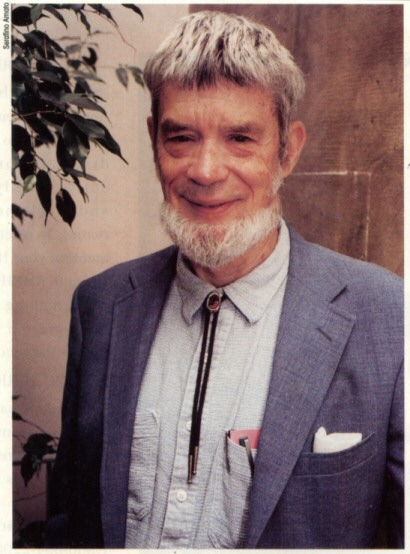
George Christopher Williams (1926–2010) was an American evolutionary biologist, professor at the State University of New York at Stony Brook, known for the theory of antagonistic pleiotropy and for his rigorous critique of loose group-selectionist reasoning in evolutionary biology.
Antagonistic pleiotropy
In his 1957 paper “Pleiotropy, Natural Selection, and the Evolution of Senescence”, Williams proposed that genes with beneficial effects early in life and harmful effects late in life can be strongly favored by selection, because the force of selection declines with age. This theory made aging an evolved side effect of early-life adaptation rather than a program of wear, and it remains one of the two pillars of the evolutionary theory of aging alongside Medawar’s selection shadow theory.
Adaptation and Natural Selection
Williams’s 1966 book Adaptation and Natural Selection set a strict standard for invoking adaptation: adaptations should be explained as products of selection among individuals (and ultimately genes), not as benefits to groups, unless group-level selection could be shown to be strong enough. The book is widely credited with marginalizing naive group selection for decades and with preparing the gene’s-eye view of evolution later popularized by Richard Dawkins.
Later work
With Randolph Nesse, Williams co-authored Why We Get Sick (1991), a founding text of Darwinian medicine, which applied evolutionary reasoning — including antagonistic pleiotropy — to human disease.
Notes
- Draft stub — maintenance agent to expand with biography and the 1999 Crafoord Prize.