Non-cell-autonomous tumor suppression
For the human social-coordination analogy, see Anti-frontrunner coalitions.
Non-cell-autonomous tumor suppression (also called somatic anti-frontrunner dynamics) happens when neighboring cells stop a mutant cell from growing into a tumor. Adult human tissues build up thousands of clones with cancer-driver mutations over a lifetime, yet clinical cancer stays rare. Wild-type neighbors and rival mutant clones hold breakaway cells down by ejecting them, crowding them to death, or outcompeting them.
flowchart TD
    M["Mutant cell arises"] --> B{"Local balance"}

    subgraph Suppress["Tissue holds leverage"]
        E["EDAC extrusion"]
        C["Compaction + p53"]
        I["Clonal interference"]
        T["Progenitor turnover"]
    end

    subgraph Escape["Mutant flips leverage"]
        S["Supercompetition (Myc / NOTUM)"]
        A["Aged field exhaustion"]
    end

    B -->|"Neighbors dominate"| Suppress
    B -->|"Mutant dominates"| Escape
    Suppress --> P["Clone cleared"]
    Escape --> F["Clone fixes"]
Summary of tissue-level suppression mechanisms
| Mechanism | Canonical page | Model / Tissue | How neighbors constrain the mutant | Failure / escape mode | Primary evidence |
|---|---|---|---|---|---|
| EDAC (apical extrusion) | Epithelial defense against cancer | MDCK monolayers; mouse intestine | Normal neighbors accumulate filamin, trigger PDK4-driven mitochondrial depolarization in RasV12 cells, and eject them apically | E-cadherin loss flips extrusion into basal invasion; mutant clusters stop extruding | 12 |
| Mechanical cell competition | Cell competition | scribble-knockdown MDCK sheets | Wild-type crowding compacts polarity-defective cells, activating ROCK, p38, and lethal p53 levels | Loss of p53 removes crowding hypersensitivity | wagstaff2016 |
| Mutant-on-mutant clonal interference | Clonal interference | Mouse & human esophagus | Expanding Notch1-mutant clones collide with nascent microscopic tumors and sweep them out | Blocking clonal competition lets early tumors survive | colom2021abby2023 |
| Progenitor turnover competition | Cell competition | Mouse thymus | Bone-marrow progenitors continually outcompete and replace resident thymic precursors | Blocking fresh entry triggers resident self-renewal, Hmga1 activation, and T-ALL | martins2014 |
| Supercompetition (reversal) | Cell competition | Drosophila wing disc; mouse intestinal crypt | Reversal: mutant kills or differentiates wild-type neighbors via Dpp starvation (dMyc) or Wnt blockade (Apc → NOTUM) | Therapeutic NOTUM blockade restores wild-type competitiveness | moreno2004flanagan2021 |
1. Epithelial Defense Against Cancer (EDAC)
Main article: Epithelial defense against cancer
When a single epithelial cell acquires an oncogenic mutation such as RasV12, surrounding normal cells recognize the interface and actively eject the mutant from the monolayer.123 Normal neighbors accumulate filamin at the boundary and drive a PDK4-mediated drop in mitochondrial membrane potential inside the transformed cell, triggering apical extrusion.23 Extrusion occurs only when the mutant sits in the minority surrounded by wild-type cells; homogeneous RasV12 patches do not extrude, and losing E-cadherin in normal neighbors redirects the mutant toward basal invasion.1
2. Mechanical compaction and cell competition
Main article: Cell competition
Tissues also purge damaged or polarity-defective cells through direct fitness comparison and mechanical crowding. In MDCK monolayers, wild-type compaction squeezes scribble-depleted cells, activating Rho-associated kinase (ROCK) and p38 to push p53 to lethal levels.wagstaff2016 In the mouse thymus, continuous turnover between incoming bone-marrow progenitors and older resident precursors suppresses leukemia; blocking that competition triggers Hmga1 upregulation, activating Notch1 mutations, and T-cell acute lymphoblastic leukemia (T-ALL).martins2014
3. Mutant-on-mutant clonal interference
Main article: Clonal interference
By middle age, normal human esophagus is a dense mosaic of clones bearing mutations in cancer-associated genes such as NOTCH1 and TP53. Rather than progressing to cancer, fitter mutant clones in normal mouse esophagus physically outcompete and eliminate most nascent microscopic tumors without tumor-cell apoptosis or immune clearance.colom2021 Biallelic Notch1 loss drives clonal expansion across normal epithelium while impairing tumor proliferation—an effect mirrored by anti-NOTCH1 antibody treatment.abby2023
4. When tissue leveling flips into supercompetition
Non-cell-autonomous defenses hold only while the surrounding tissue keeps local leverage. Two failure modes reverse that balance:
- Supercompetition: Oncogenic lesions can flip the boundary interaction so the mutant actively eliminates wild-type neighbors. In Drosophila imaginal discs, dMyc-overexpressing cells starve neighbors of BMP/Dpp survival signals and induce apoptosis (see Cell competition, Flower (Drosophila), and its human orthologue CACFD1).moreno20043 In mammalian intestinal crypts, Apc-mutant stem cells secrete the Wnt antagonist NOTUM, forcing neighboring wild-type stem cells to differentiate so the mutant fixes in the crypt; blocking NOTUM prevents adenoma formation.flanagan2021
- Aged tissue exhaustion: Chronic inflammation and stem-cell decline degrade the fitness of the surrounding wild-type field, lowering the competitive barrier that previously constrained mutant clones (see Adaptive oncogenesis).
See also
- Epithelial defense against cancer
- Clonal interference
- Cell competition
- Clonal governance
- Adaptive oncogenesis
- Anti-frontrunner coalitions
References
Footnotes
- Hogan C, Dupré-Crochet S, Norman M, Kajita M, Zimmermann C, et al. (2009). “Characterization of the interface between normal and transformed epithelial cells”. Nature Cell Biology. 11 (4): 460–467. doi:10.1038/ncb1853↩↩2↩3
- Kon S, Ishibashi K, Katoh H, Kitamoto S, Shirai T, et al. (2017). “Cell competition with normal epithelial cells promotes apical extrusion of transformed cells through metabolic changes”. Nature Cell Biology. 19 (5): 530–541. doi:10.1038/ncb3509↩↩2↩3
- Tanimura N, Fujita Y (2020). “Epithelial defense against cancer (EDAC)”. Seminars in Cancer Biology. 63: 20–27. doi:10.1016/j.semcancer.2019.05.011↩↩2↩3Info
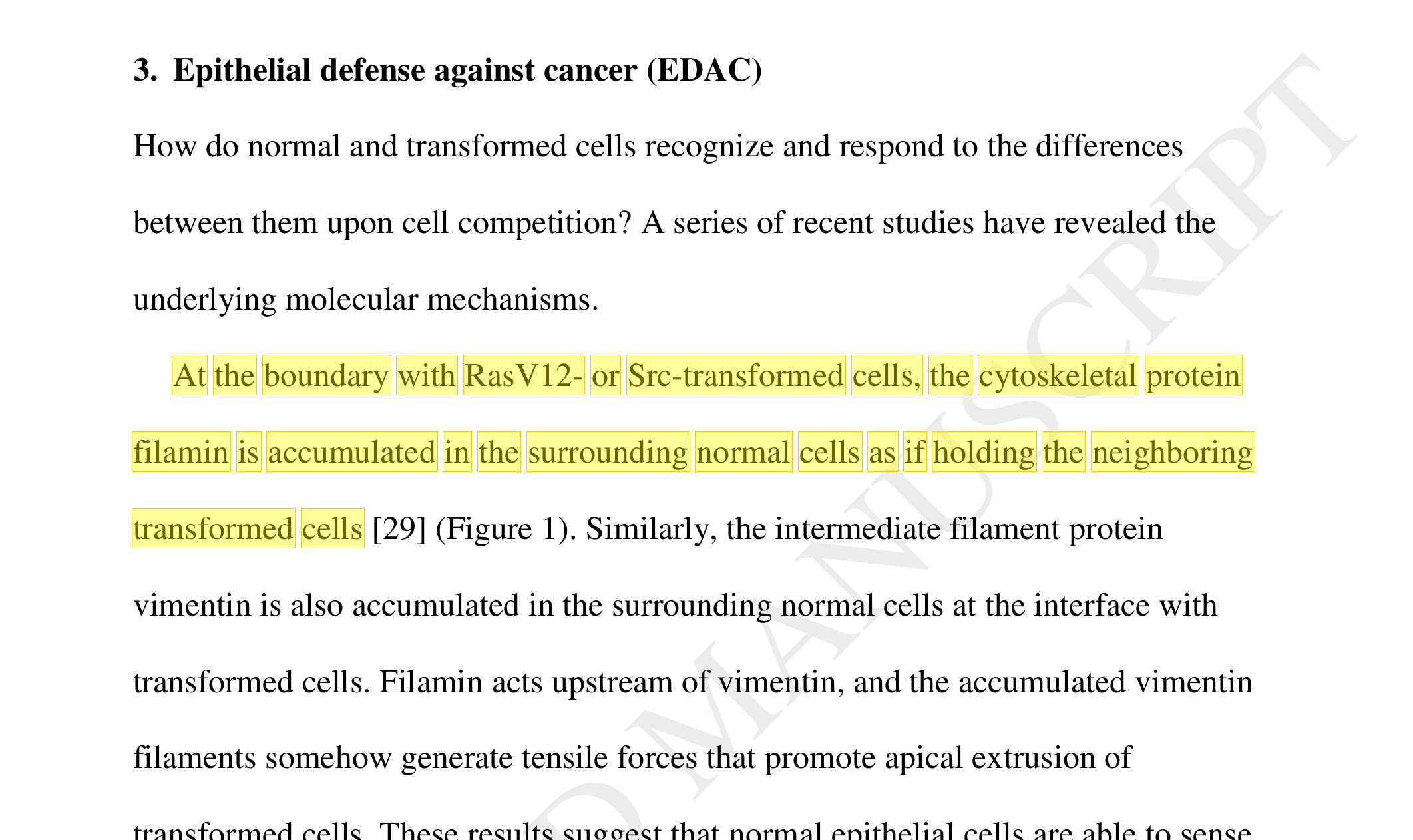
tanimura2020-p7-b3-cf250d7e99.png “At the boundary with RasV12- or Src-transformed cells, the cytoskeletal protein filamin is accumulated in the surrounding normal cells as if holding the neighboring transformed cells [29] (Figure 1)… Thus, at the initial stage of carcinogenesis, normal epithelia are equipped with anti-tumor activity that does not involve immune systems; this process is termed ‘epithelial defense against cancer (EDAC)’.”
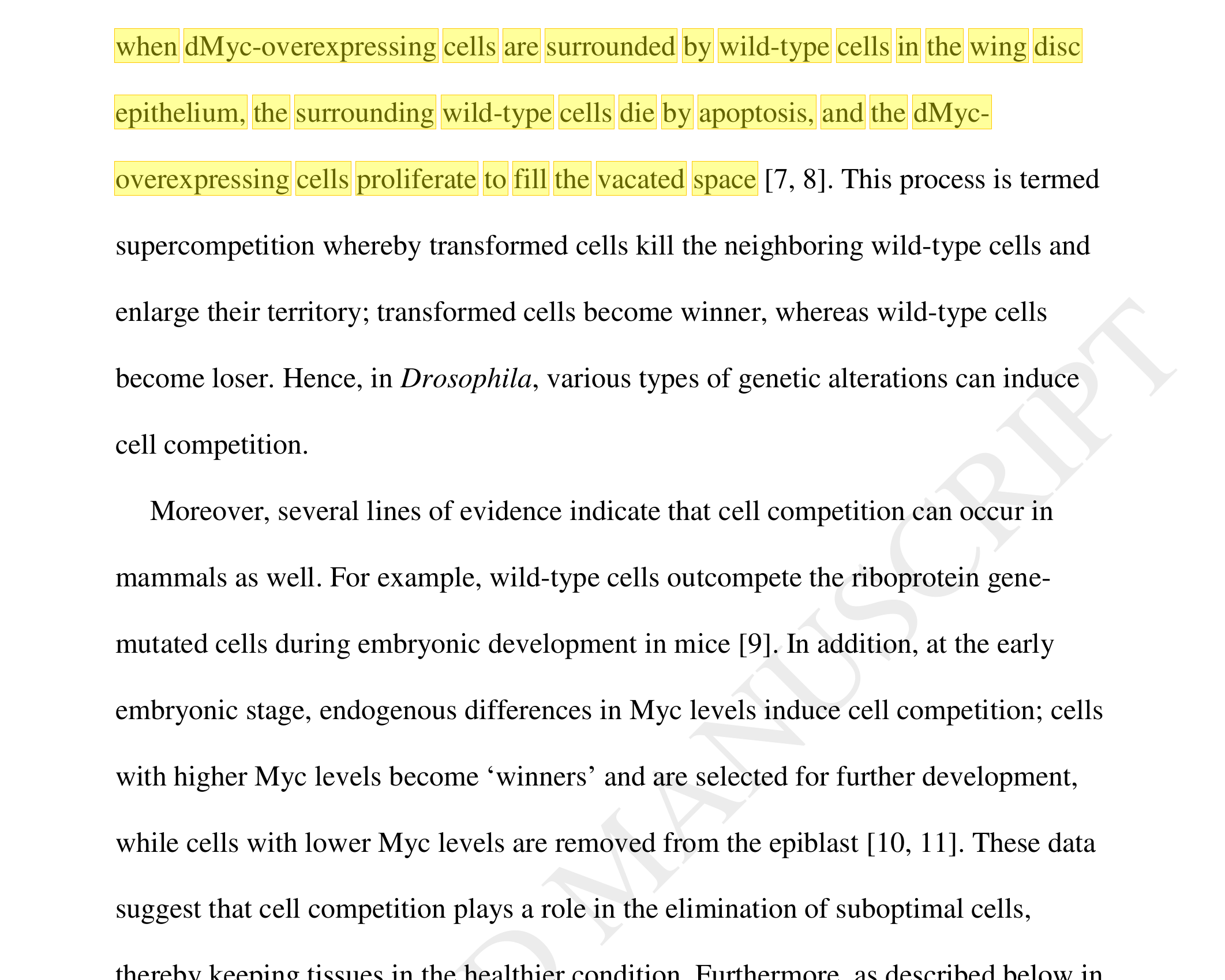
tanimura2020-p4-b0-e7ecc85ba0.png “when dMyc-overexpressing cells are surrounded by wild-type cells in the wing disc epithelium, the surrounding wild-type cells die by apoptosis, and the dMyc-overexpressing cells proliferate to fill the vacated space [7, 8]. This process is termed supercompetition whereby transformed cells kill the neighboring wild-type cells and enlarge their territory.”wagstaff2016: Wagstaff L, Goschorska M, Kozyrska K, Duclos G, Kucinski I, et al. (2016). “Mechanical cell competition kills cells via induction of lethal p53 levels”. Nature Communications. 7: 11373. doi:10.1038/ncomms11373 [!info]-
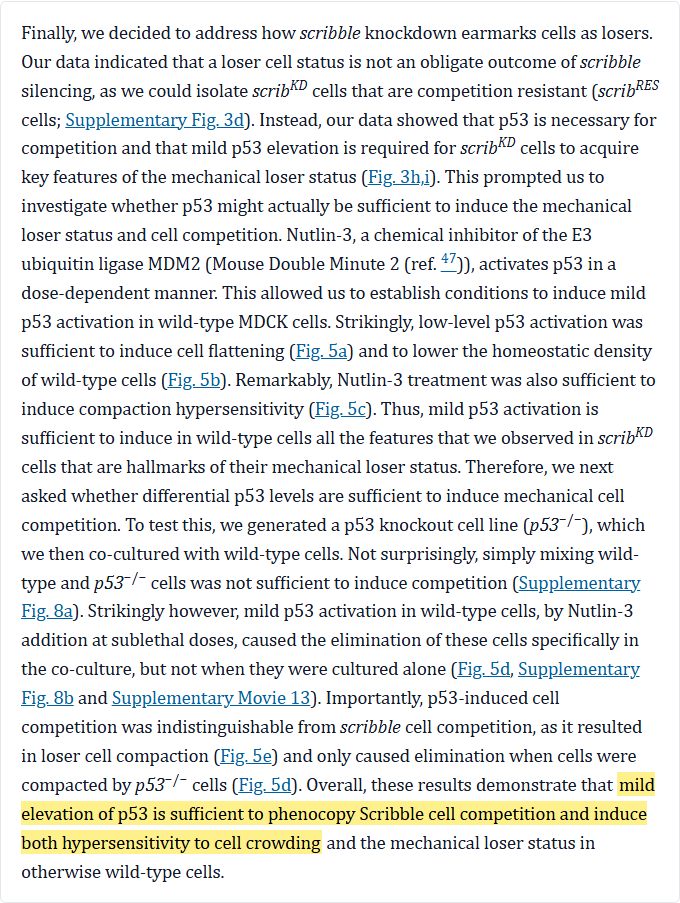
wagstaff2016-html-73c16ee8b6.png “Overall, these results demonstrate that mild elevation of p53 is sufficient to phenocopy Scribble cell competition and induce both hypersensitivity to cell crowding and the mechanical loser status in otherwise wild-type cells.”colom2021: Colom B, Herms A, Hall MWJ, Dentro SC, King C, et al. (2021). “Mutant clones in normal epithelium outcompete and eliminate emerging tumours”. Nature. 598 (7881): 510–514. doi:10.1038/s41586-021-03965-7 [!info]-
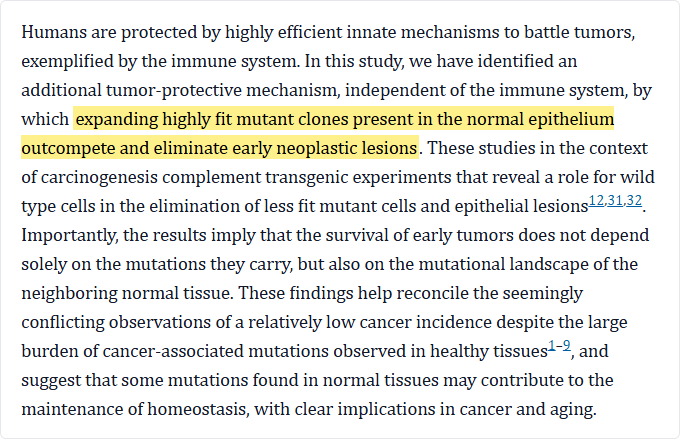
colom2021-html-5709994860.png “In this study, we have identified an additional tumor-protective mechanism, independent of the immune system, by which expanding highly fit mutant clones present in the normal epithelium outcompete and eliminate early neoplastic lesions.”abby2023: Abby E, Dentro SC, Hall MWJ, Fowler JC, Ong SH, et al. (2023). “Notch1 mutations drive clonal expansion in normal esophageal epithelium but impair tumor growth”. Nature Genetics. 55 (2): 232–245. doi:10.1038/s41588-022-01280-z [!info]-
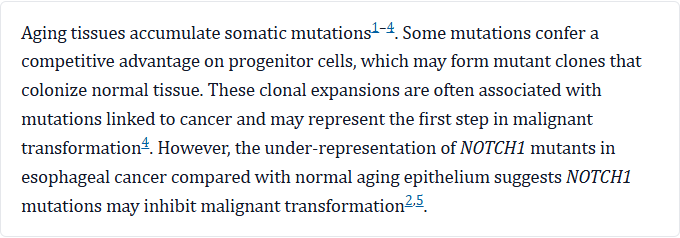
abby2023-html-21e8ddf387.png “However, the under-representation of NOTCH1 mutants in esophageal cancer compared with normal aging epithelium suggests NOTCH1 mutations may inhibit malignant transformation.”martins2014: Martins VC, Busch K, Juraeva D, Blum C, Ludwig C, et al. (2014). “Cell competition is a tumour suppressor mechanism in the thymus”. Nature. 509 (7501): 465–470. doi:10.1038/nature13317 [!info]-
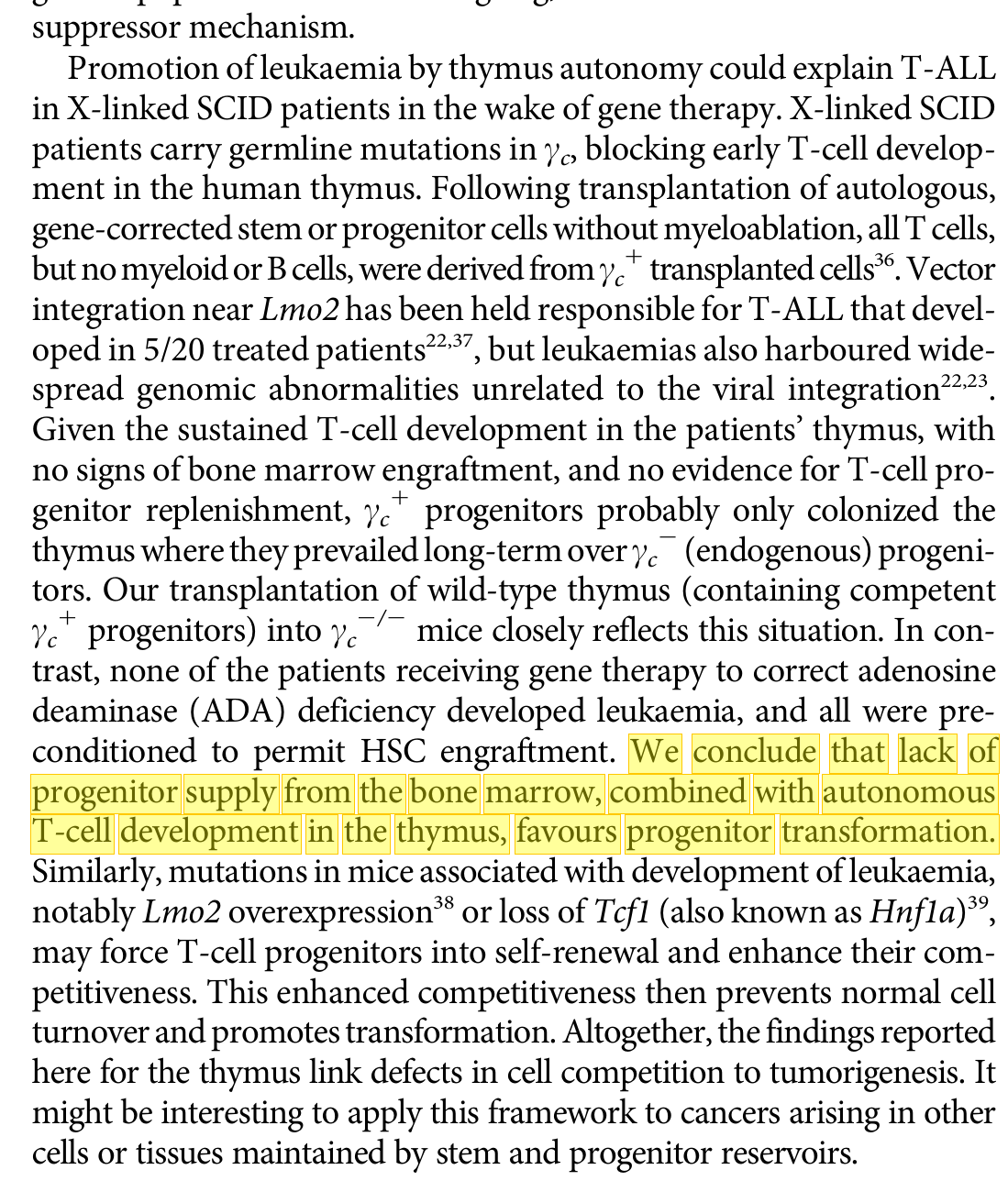
verac.martins2014-p5-b6-ecd4510bfb.png “We conclude that lack of progenitor supply from the bone marrow, combined with autonomous T-cell development in the thymus, favours progenitor transformation.”moreno2004: Moreno E, Basler K (2004). “dMyc transforms cells into super-competitors”. Cell. 117 (1): 117–129. doi:10.1016/S0092-8674(04)00262-4flanagan2021: Flanagan DJ, Pentinmikko N, Luopajärvi K, Willis NJ, Gilroy K, et al. (2021). “NOTUM from Apc-mutant cells biases clonal competition to initiate cancer”. Nature. 594 (7863): 430–435. doi:10.1038/s41586-021-03525-z [!info]-
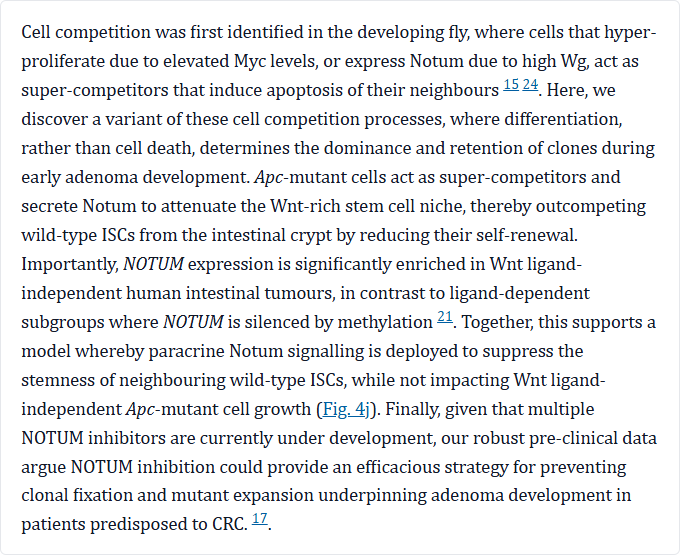
flanagan2021-html-f5b2ced68f.png “Apc-mutant cells act as super-competitors and secrete Notum to attenuate the Wnt-rich stem cell niche, thereby outcompeting wild-type ISCs from the intestinal crypt by reducing their self-renewal.”