Peter Nowell
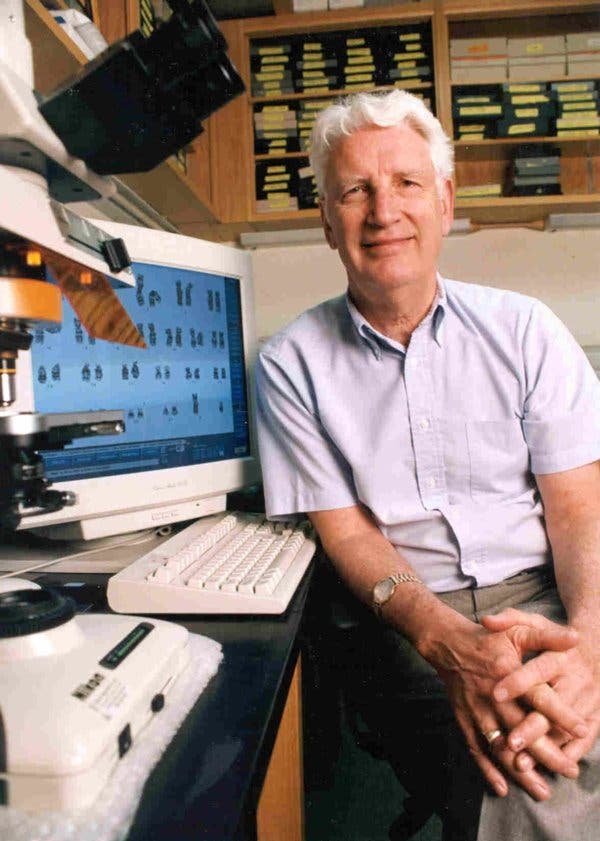
Peter C. Nowell (1928–2016) was an American pathologist and cancer researcher at the University of Pennsylvania, known for co-discovering the Philadelphia chromosome and for the clonal evolution model of cancer.
The Philadelphia chromosome
In 1960, Nowell and David Hungerford described an abnormally small chromosome consistently present in the leukemic cells of patients with chronic myeloid leukemia - the first genetic defect linked to a human cancer. The finding, later shown by Janet Rowley to result from a reciprocal translocation between chromosomes 9 and 22, established that cancer is a genetic disease at the level of the somatic cell and ultimately led to the targeted drug imatinib. Nowell shared the 1998 Albert Lasker Clinical Medical Research Award for this work.
Clonal evolution of cancer
In 1976, Nowell published “The clonal evolution of tumor cell populations” in Science, arguing that tumors are populations of cells descended from a common ancestor, within which continuous heritable variation and selection drive progression. Genomic instability supplies the variation; the tumor microenvironment and therapy supply the selection. The paper framed cancer progression as a Darwinian evolutionary process, became the founding citation for evolutionary oncology, and underlies later treatment strategies that account for selection, such as adaptive therapy.
Notes
- Draft stub - maintenance agent to expand with biography, chairmanship of Penn Pathology, and honors.